How Visibility Starts with Digital Marketing: Your Brand Is Invisible Without It
Let's start with a hard truth.
You could have the best product in your category. Better quality than your top three competitors. A great website. A team that genuinely cares about customers. And none of it will matter, not one pound or one dollar of revenue, if nobody can find you.
That is not a dramatic overstatement. It is the structure of modern buying. Before a buyer picks up the phone, sends an email, or walks into a store, they have already searched, scrolled, compared, and formed an opinion. If your brand was not part of that journey, you were not considered.
This is what we mean when we say visibility is where business starts. Not the product. Not the price. Visibility. Digital marketing is how you build it.
Why being good is no longer enough
There is a persistent myth in business, especially among founders who built their early customer base through word of mouth, that quality eventually speaks for itself. In a market with three competitors and a long buying cycle, that was sometimes true. In a market where your buyer's attention is split across search results, social feeds, email inboxes, video platforms, and comparison sites, it is no longer true.
The companies winning in 2026 are not always the ones with the best product. They are the ones who show up where their buyers are looking.
Consider what your invisible brand loses every day it stays invisible:
- A buyer searches your category on Google. Your competitor appears. You do not. The sale goes elsewhere.
- A potential customer sees a competitor's Instagram ad three times this week. Next week, when they are ready to buy, they think of that brand, not yours.
- A journalist or blogger is writing a roundup of the best products in your category. They search online, find your competitor's guide, cite them as an expert, and hand them the link, authority, and trust.
Visibility is not just about the immediate sale. It is about occupying space in the buyer's mind before they are ready to buy. That is what digital marketing builds. Without it, you are invisible at every stage of the buying journey.
What digital marketing visibility actually delivers
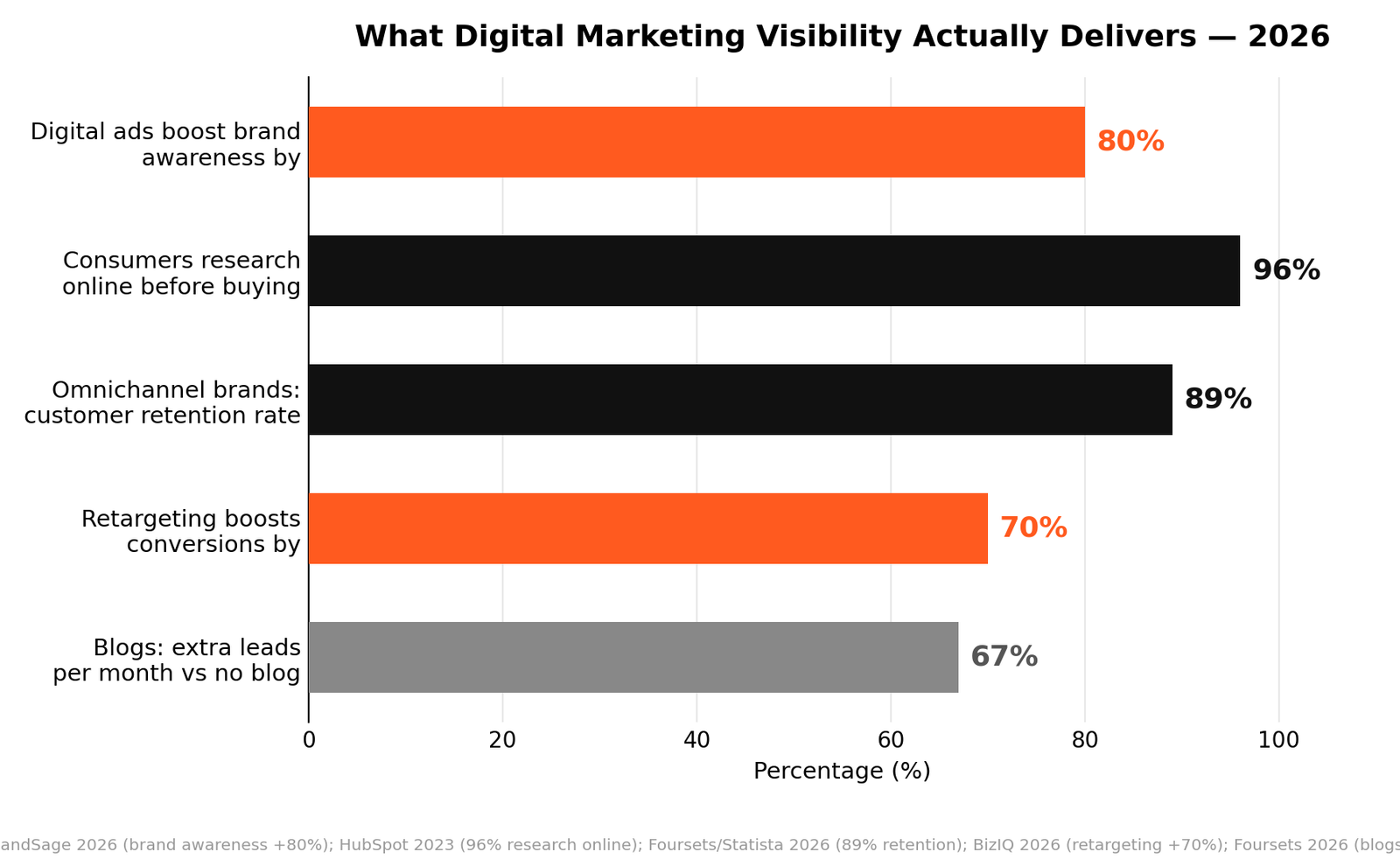
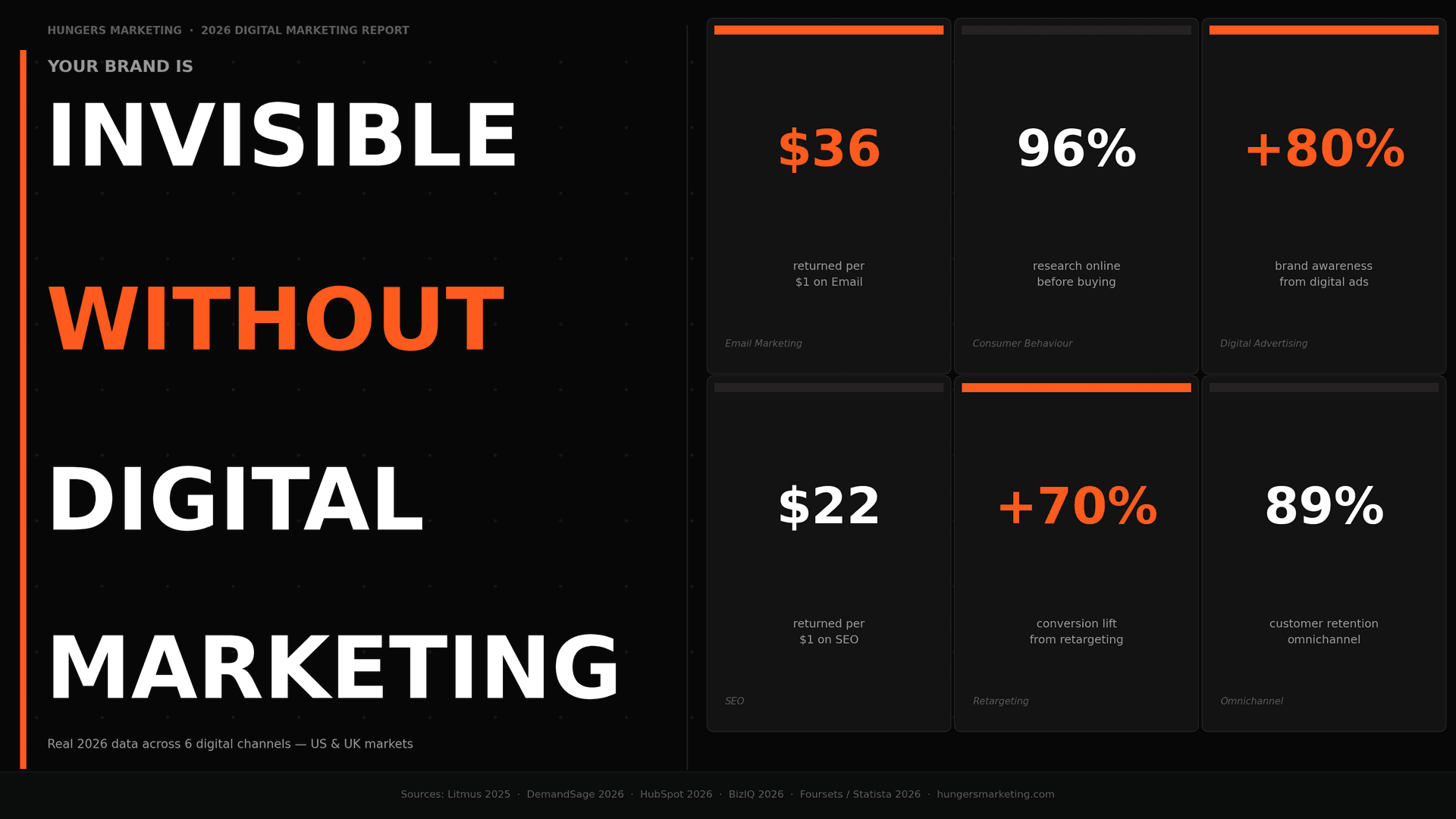
The numbers tell a simple story: when brands invest in visibility, the market starts recognizing them, returning to them, and trusting them.
Digital advertising increases brand awareness. Awareness is the baseline measure of whether people know your brand exists. It is the first step before trust, consideration, or conversion.
Omnichannel visibility improves retention. A customer who sees your brand on social, gets your email, and finds you again in search is more likely to remember you than one who only saw you once.
Retargeting brings back warm visitors. Most buyers do not convert on the first visit. Retargeting gives your brand a second and third chance with people who already showed intent.
Blog content creates more entry points. Every useful article becomes another way for a customer to find you. Content is not a vanity exercise. It is a discovery system that keeps working after you publish.
The six digital marketing channels and what each one returns
Not all digital marketing channels do the same job. Some create demand. Some capture demand. Some convert existing attention into revenue. A smart visibility strategy understands the role of each one.
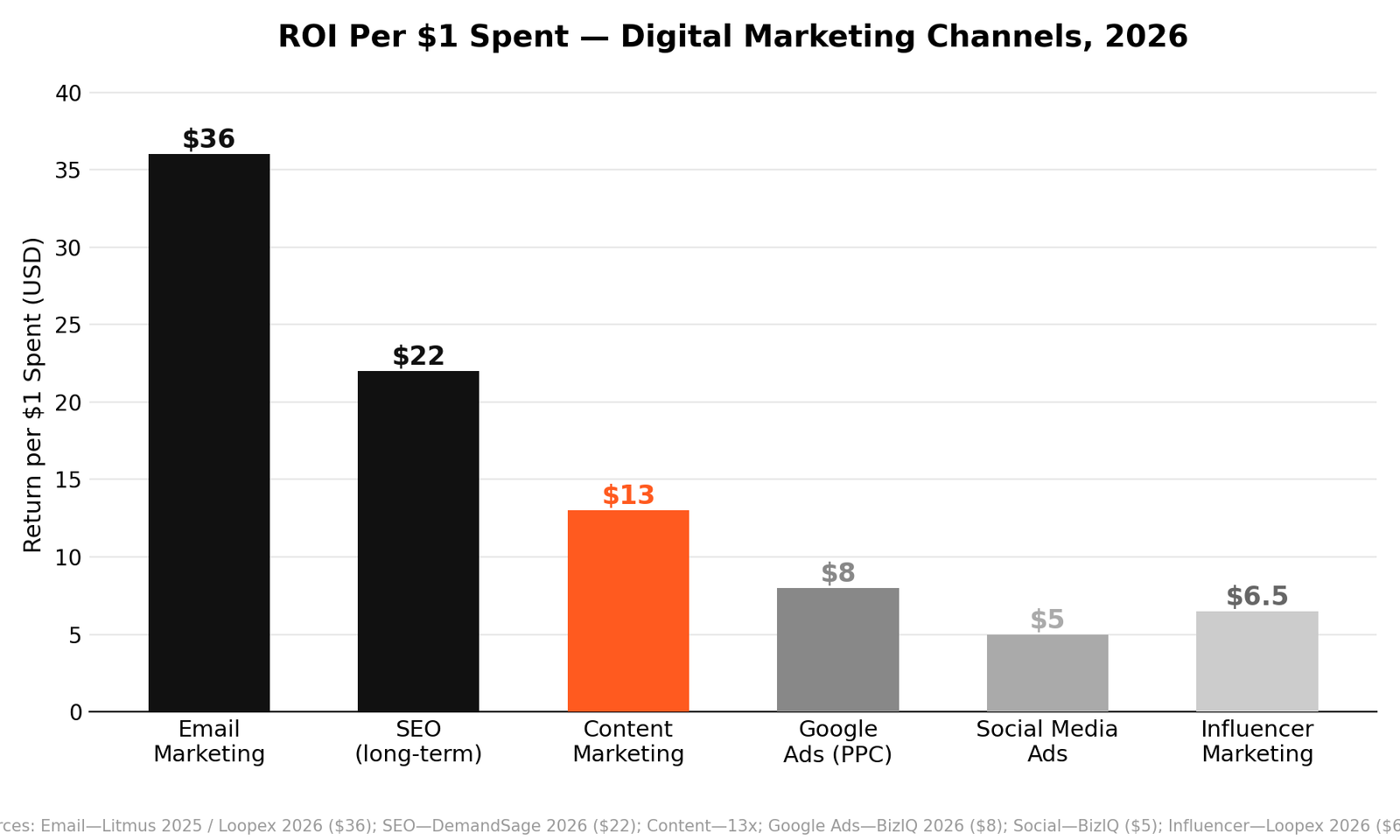
1. Email marketing
Email is one of the most underrated visibility channels because it does not feel public. But commercially, it is powerful because it gives you a direct line to people who already raised their hand.
You do not have to keep paying to reach an email subscriber. You can welcome them, educate them, recover abandoned carts, announce launches, and bring them back after purchase. That makes email a recurring asset instead of a one-time traffic source.
Real example: Airbnb uses behavior-triggered emails such as browse reminders, booking prompts, location-based recommendations, and personalized travel nudges. Each message brings a warm user back into the platform.
What it means for your brand: Build your email list from day one. Every ad click that does not lead to a purchase should still have a second purpose: capture the email and continue the relationship.
2. SEO
SEO is the visibility channel that compounds. Paid ads can put you in front of customers today, but SEO builds authority that can keep paying back months and years later.
If your buyers are searching for product comparisons, category advice, pricing guidance, local services, or how-to answers, your brand should be there. If you are not, your competitors get the click, the trust, and the opportunity to sell.
Real example: HubSpot built a content and SEO engine around the questions its buyers ask before they are ready for software. That content attracts millions of visits and turns education into pipeline.
What it means for your brand: SEO is not a quick fix, but it is one of the most durable forms of visibility you can build. Consistent content, technical site health, internal links, and clear keyword strategy will usually outperform short bursts of disconnected content.
3. Content marketing
Content is the backbone of every other channel. It feeds SEO, gives email campaigns something useful to send, gives social media something worth sharing, and helps your brand sound like an expert instead of just a seller.
Real example: Shopify's blog and learning content answers nearly every question an ecommerce founder might ask, from starting a store to choosing sales channels. That content ranks, educates, and funnels readers into the Shopify ecosystem.
What it means for your brand: Every useful blog post, guide, case study, video, or comparison page is a permanent asset. It works while you sleep, does not need a daily ad budget, and builds credibility that plain ads cannot buy.
4. Google Ads
Google Ads gives you immediate visibility when buyers already have intent. Someone searching for a product, service, or solution is much closer to purchase than someone casually scrolling a feed.
The advantage is speed. SEO takes time. Google Ads can place you near the top of high-intent search results quickly. The trade-off is dependency: when you stop paying, the visibility stops.
Real example: Nike uses search and shopping visibility for high-intent product searches. When someone knows the product type, size, or model they want, Google Ads can put the right offer directly in front of them.
What it means for your brand: Use PPC to capture demand while your organic presence builds. Do not treat it as a substitute for SEO. Treat it as the short-term bridge that funds the long-term engine.
5. Social media advertising
Social ads are discovery engines. They put your product in front of people who may not be searching yet, but who fit the profile of someone likely to care.
That makes social different from Google. Google captures demand. Social creates it. For visual categories such as fashion, beauty, food, home, fitness, and lifestyle, that discovery function can be the difference between being unknown and being remembered.
Real example: Gymshark built a global fitness brand by using social content, community, creators, and paid amplification before it had the kind of search demand larger legacy brands enjoyed.
What it means for your brand: Social ads are not competing with Google Ads. They are doing a different job. Run both when the budget allows, and let discovery feed future search, retargeting, and email growth.
6. Influencer marketing
Influencer marketing works because it borrows trust. A recommendation from someone your audience already follows carries more credibility than a brand talking about itself.
The best influencer campaigns are not always celebrity campaigns. Micro-influencers often work better for niche products because their audiences are more focused and their recommendations feel more personal.
Real example: Daniel Wellington grew rapidly by gifting watches to micro-influencers and turning creator posts into social proof at scale.
What it means for your brand: Start small. Find creators whose audience matches your buyer, seed product, measure performance, and build repeat partnerships with the people who actually move revenue.
Long-term vs short-term: the visibility investment map
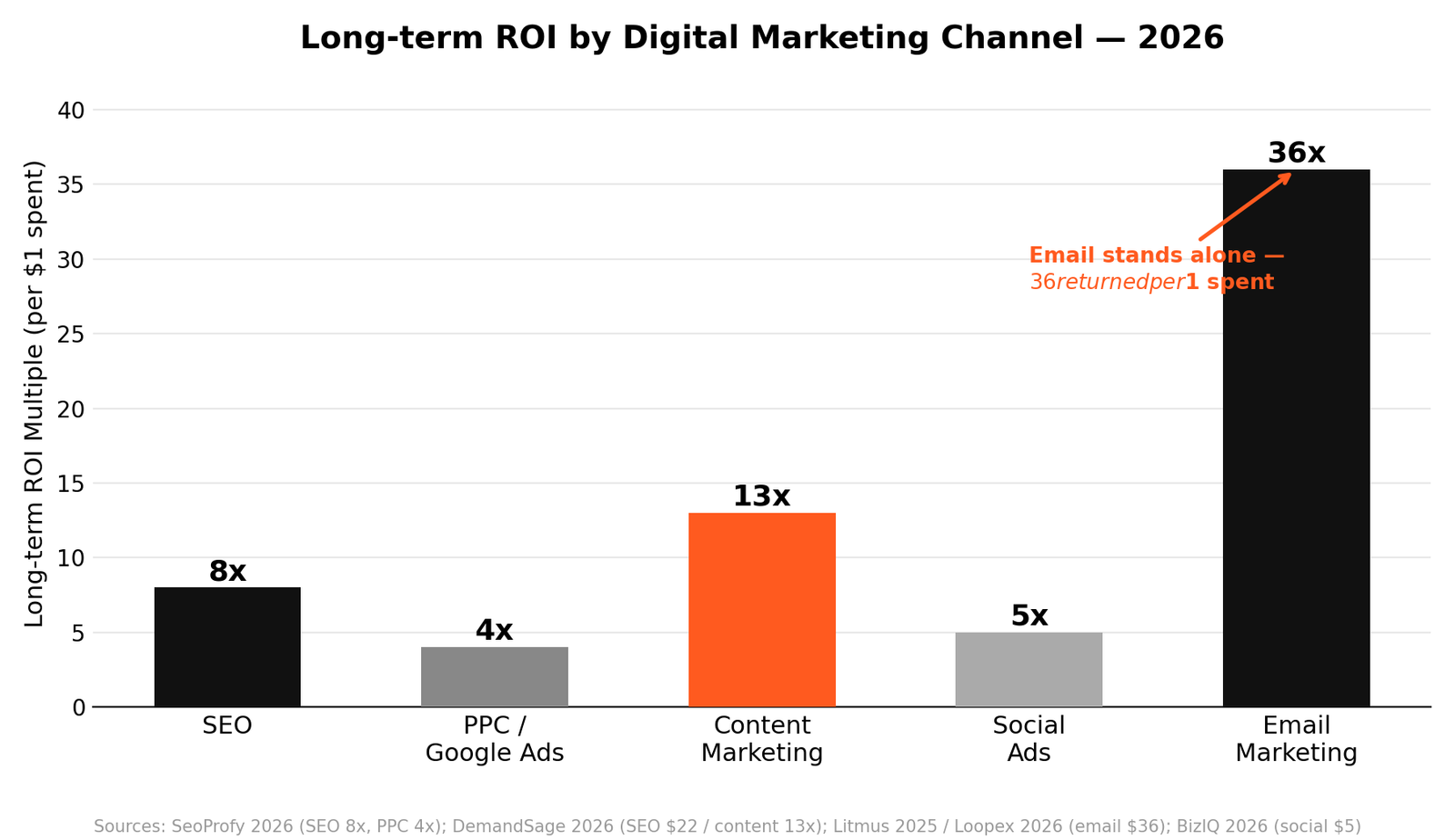
The visibility map tells a consistent story. Channels that create owned assets, such as email, SEO, and content, tend to become more valuable over time. Channels that require constant funding, such as paid ads, can move faster but stop the moment spend stops.
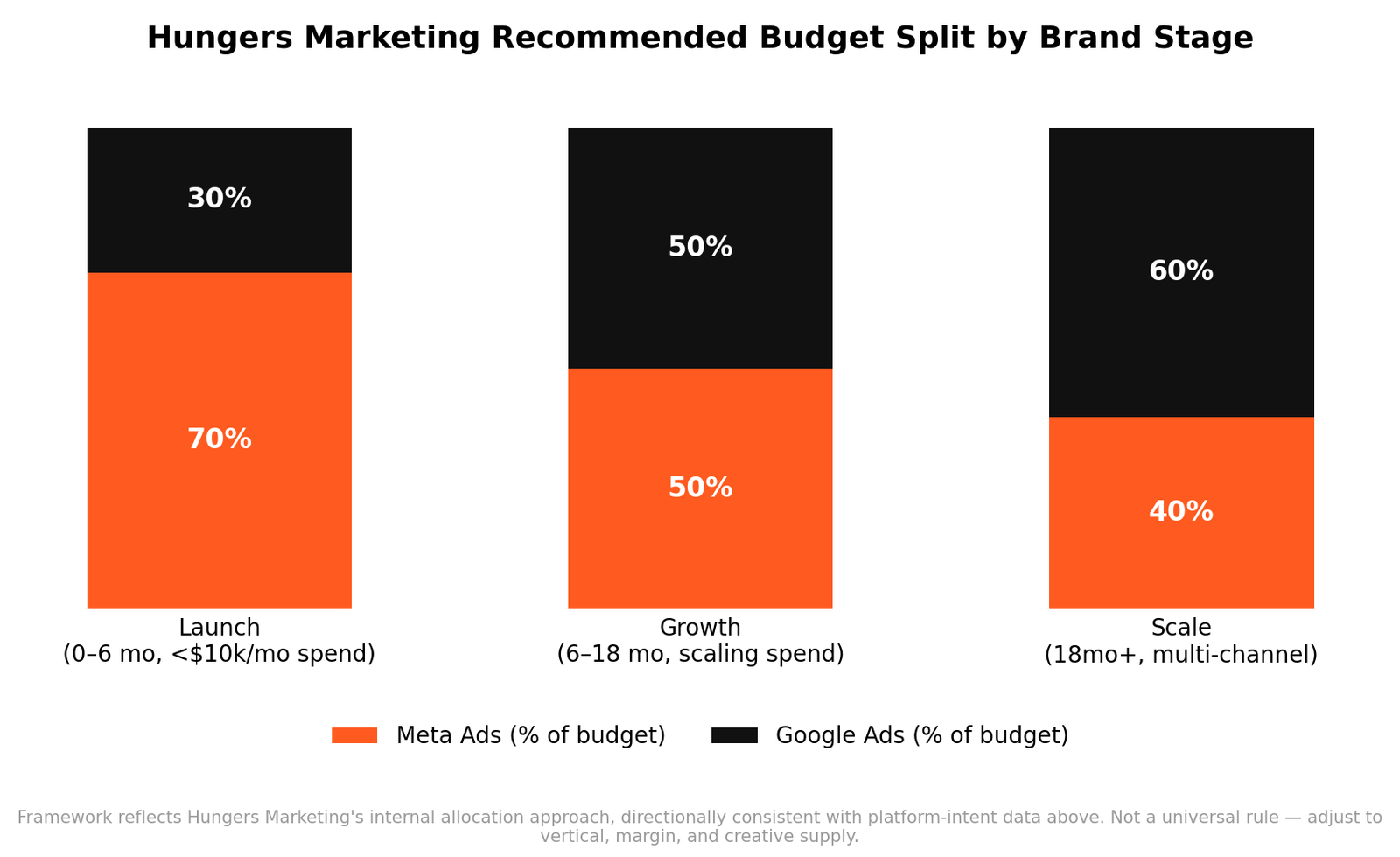
The smartest digital marketing strategy in 2026 is not a choice between organic and paid. It is a sequence.
Use paid channels to drive traffic, test messaging, and create early revenue while your organic presence builds. Then, as SEO, content, and email compound, reduce dependency on paid traffic or reinvest the freed budget into the campaigns already proving themselves.
Owned channels appreciate. Rented channels need ongoing funding. A strong brand uses both, but it does not confuse the two.
The visibility framework: how to build it channel by channel
Here is the order we recommend for most ecommerce, DTC, and service brands starting from low or zero digital visibility.
Month 1 to 3: Foundation
- Set up Google Analytics 4, Google Search Console, Meta Pixel, and conversion tracking correctly.
- Publish four to six well-researched blog posts targeting questions your buyers already search.
- Add an email capture offer to your website, such as a discount, guide, checklist, audit, or waitlist.
- Launch one focused Meta Ads test with one audience, one offer, and a small set of creatives.
- Build basic retargeting audiences so future traffic does not disappear after one visit.
Month 3 to 6: Build
- Increase blog publishing to two to four posts per month.
- Launch Google Search or Shopping campaigns for your highest-intent products or services.
- Send a useful monthly email to your list instead of letting subscribers go cold.
- Retarget site visitors who did not convert.
- Start internal linking between blog posts, service pages, and conversion pages.
Month 6 to 12: Scale
- Double down on content that has started ranking or converting.
- Build social presence on the one platform where your audience spends the most time.
- Introduce influencer outreach with micro-creators in your niche.
- Segment email campaigns for buyers, non-buyers, repeat customers, and high-intent leads.
- Review blended CAC, ROAS, organic traffic, lead quality, and revenue together instead of judging each channel in isolation.
Live brand examples: visibility in action
Amazon uses personalization across search, email, display, recommendations, and retargeting. If you browse once, the platform has multiple ways to bring you back.
Airbnb combines performance marketing, SEO, email, and content to stay visible across the full travel planning journey, from inspiration to booking.
Gymshark proves that social visibility, built intentionally through creators, content, community, and paid amplification, can become a business asset.
What these brands have in common is not just budget. It is intentionality. Every channel has a job. Every touchpoint supports the next one.
What holds most brands back from building visibility
"We do not have budget for marketing yet." This is usually backwards. Revenue often comes after visibility, not before it. Start with what you have, but start.
"We tried ads and they did not work." Most failed ad experiments are not failed channels. They are unclear tests with weak creative, poor tracking, no retargeting, or unrealistic timelines.
"We do not know which channel to start with." Start where your buyers already spend time and where you can stay consistent. Depth in one channel beats shallow presence across six.
"Our website is not ready." Your site does not need to be perfect to start building visibility. Publish the post. Run the test. Capture the email. Improve as data comes in.
Frequently asked questions
How long does it take to see results from digital marketing?
Paid ads can produce results within days. SEO and content usually take several months to show meaningful organic traffic. Email builds gradually but compounds as the list grows. A serious visibility strategy should be planned over a twelve-month horizon.
Which digital marketing channel is best for small brands?
Email and SEO are usually the strongest long-term foundations because they create owned assets. A small paid budget can help test messaging and drive early traffic while organic visibility builds.
Is digital marketing the same for UK and US brands?
The channels are mostly the same, but benchmarks, costs, search behavior, and competitive pressure differ by market. The strategy should stay consistent while the numbers are calibrated to the market.
How do I measure if digital marketing is working?
Start with your break-even cost per acquisition. Then track traffic by source, email list growth, cost per lead, conversion rate, branded search growth, organic rankings, and blended ROAS. Avoid judging channels in isolation because they influence each other.
What is the biggest mistake brands make with digital marketing?
Starting too many channels at once, doing none of them consistently, and quitting before compounding begins. Visibility is built through repeated presence, not one-off bursts.
Your brand's visibility starts with one decision
Every brand you admire, the ones that seem to be everywhere and come up in customer conversations before you even mention them, built that presence deliberately. Channel by channel. Search by search. Email by email. Post by post.
They are not visible because they got lucky. They are visible because they decided to show up consistently.
That decision is where visibility starts.
Get a Free Digital Marketing Audit
Talk to Ali and the Hungers Marketing Team
Written by Ali Raza, Director at Hungers Marketing. Ali Raza is the founder and Director of Hungers Marketing, a Shopify development and ecommerce growth agency working with DTC and ecommerce brands across the UK and United States. Hungers Marketing specialises in performance marketing, Shopify store builds, and conversion rate optimisation for brands ready to grow.
Sources: DemandSage digital marketing statistics; BizIQ digital marketing ROI guidance; HubSpot marketing and buyer behaviour research; SeoProfy digital marketing statistics; Foursets digital marketing statistics; Loopex Digital marketing statistics; Litmus email marketing ROI reporting; Statista digital advertising data. Figures are industry benchmarks and should be validated against your own margins, market, and analytics.